 A Guest Post by Rudra Baral
Soon after moving to Columbia in 2023, I learned that the Columbia Community Garden Coalition manages several community gardens across the city. For my family, a community garden has become much more than a place to grow vegetables — it is a place of food, health, friendship, learning, and belonging.
We have already started gardening this year and some of us have already harvested cilantro and mustard leaves. We love growing and harvesting Asian vegetables such as hot chilies, okra, eggplant, pumpkin, bitter gourd, bottle gourd, broadleaf mustard, Korean radish, garlic, and yard-long beans. Many of these vegetables are difficult to find in local stores, and when they are available, they are often expensive. Having access to plots at the Ash Street Community Garden and Britt-Hall Community Garden has made a meaningful difference for our family by providing both fresh vegetables and a sense of connection.
I am also grateful to serve as a garden co-leader for Ash St Community Garden and Britt-Hall Community Garden. Thanks to the support of the Columbia Community Garden Coalition and the City of Columbia, more than 50 families now have access to these shared spaces in these two community gardens. Throughout the summer and fall, families are able to grow enough vegetables not only for their own households but also to share with friends and neighbors, reducing grocery costs and strengthening community ties.
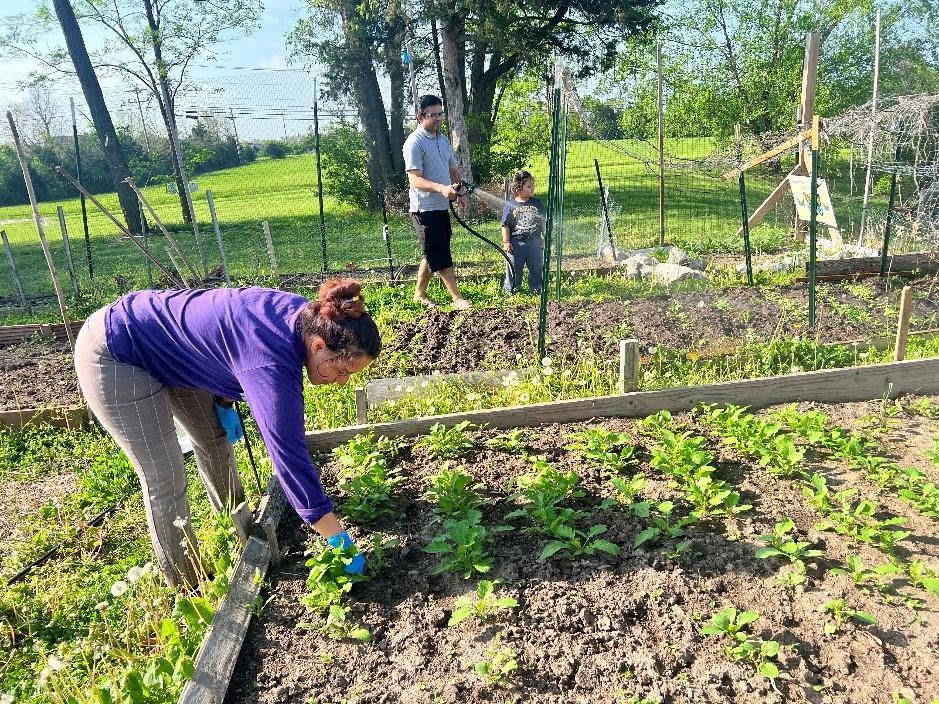
Mohan is irrigating his mustard and Keshabi is weeding her plot
However, the value of community gardens goes far beyond vegetable production. Gardening offers physical activity, fresh air, and access to healthy, organic produce. It also provides important mental health benefits. For individuals who may not have jobs or who spend more time at home, gardening offers a meaningful daily activity and helps reduce stress and mental pressure.
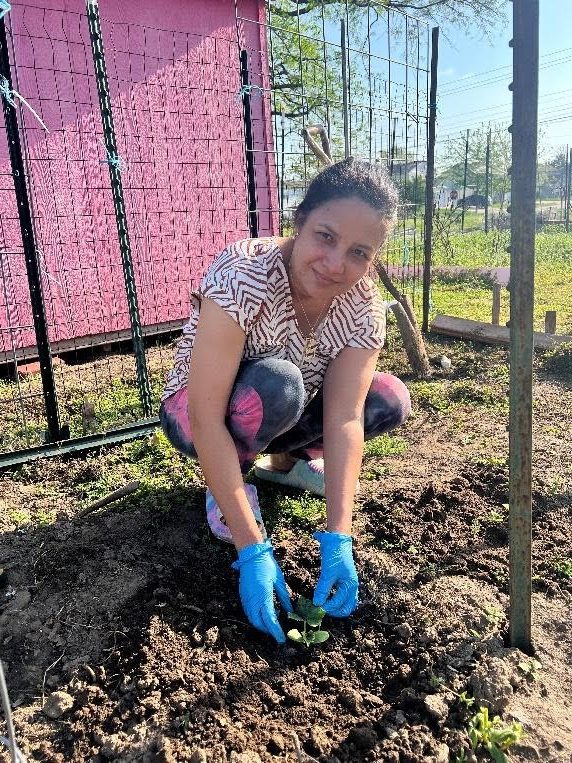
Sangita is planting a cucumber seedling at Britt-Hall Community Garden
Community gardens are also powerful spaces of cultural exchange. Walking through the garden plots, you see families from many countries growing vegetables from their homelands. Gardeners share seeds, tools, recipes, and stories, learning from one another and building relationships that might never form otherwise. These daily interactions help newcomers feel welcomed while enriching the broader community.
Children especially enjoy gardening in ways that go beyond just helping with chores. They love planting seeds, watering plants, and watching them grow day by day. It becomes a hands-on learning experience where they understand how to produce vegetables and develop patience and responsibility. Gardening also gives them a chance to spend time outdoors, get their hands in the soil, and take pride in harvesting vegetables they helped grow. For many kids, it turns into both a fun activity and a meaningful way to connect with nature.
Community gardens help build stronger, healthier neighborhoods. They bring people together, encourage cooperation, and make productive use of urban land. Most importantly, they create spaces where people feel seen, valued, and connected. For many families like mine, community gardens are not just places to grow vegetables, they are places where community truly grows.
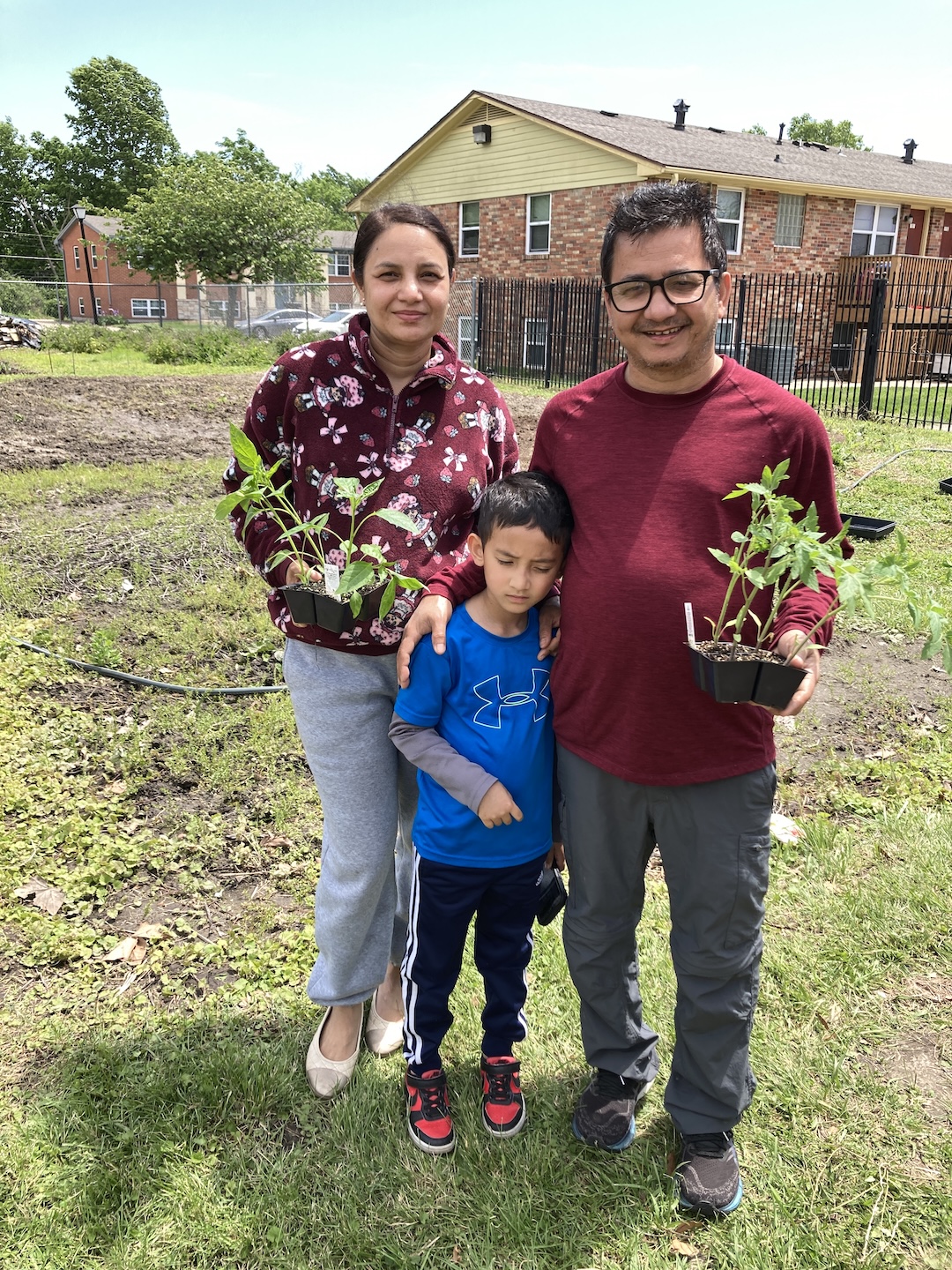
The author with his family pictured at Claudell Garden.

