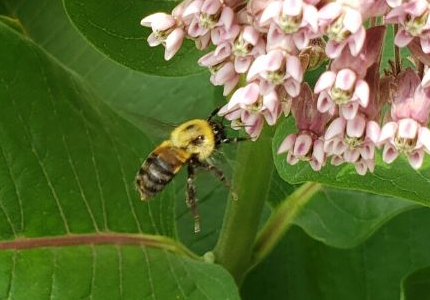
The Missouri Prairie Foundation and the Grow Native initiative have put together a fact sheet about the relationship between native plants, pollinators and fruit and vegetable production. See which native plants attract the pollinators your vegetables need.
Perhaps there’s a corner of your garden plot, an area around the edges of the garden or a communal plot that could be home to some of these important native flowers. The CGC can help connect you and your community garden leader with a native plant consultant from the City of Columbia and our group may be able to offer some funding for native plant projects. Just get in touch with us at info@comogarden.org.
The Spring Thaw is the kick-off to the community gardening season. There will be representatives from all the gardens, so you can join a garden as a newcomer or confirm a plot assignment for previous gardeners. Plus, everyone can network and get gardening advice from other gardeners.
There will be educational information about cover cropping and water conservation, and we’ll have a free seeds available for gardeners at member gardens.
If you know someone who’d like to get a community garden plot this year, please share these event details!
A HUGE THANK YOU to everyone who supported community gardens during the CoMoGives local donations campaign!!! Whether you were able to give $10 or $200, or even just passed on our message, we are very grateful for your support!
We’re excited about a new year of gardening and hope that we can supply lots of new and continuing gardeners with the means to grow some of their own food in 2020. Our first meeting of the new year happens Wed., January 8 at the Columbia Public Library at 7 p.m. We welcome funding requests from member gardens, and we’d be happy to meet any volunteers who’d like to get involved.
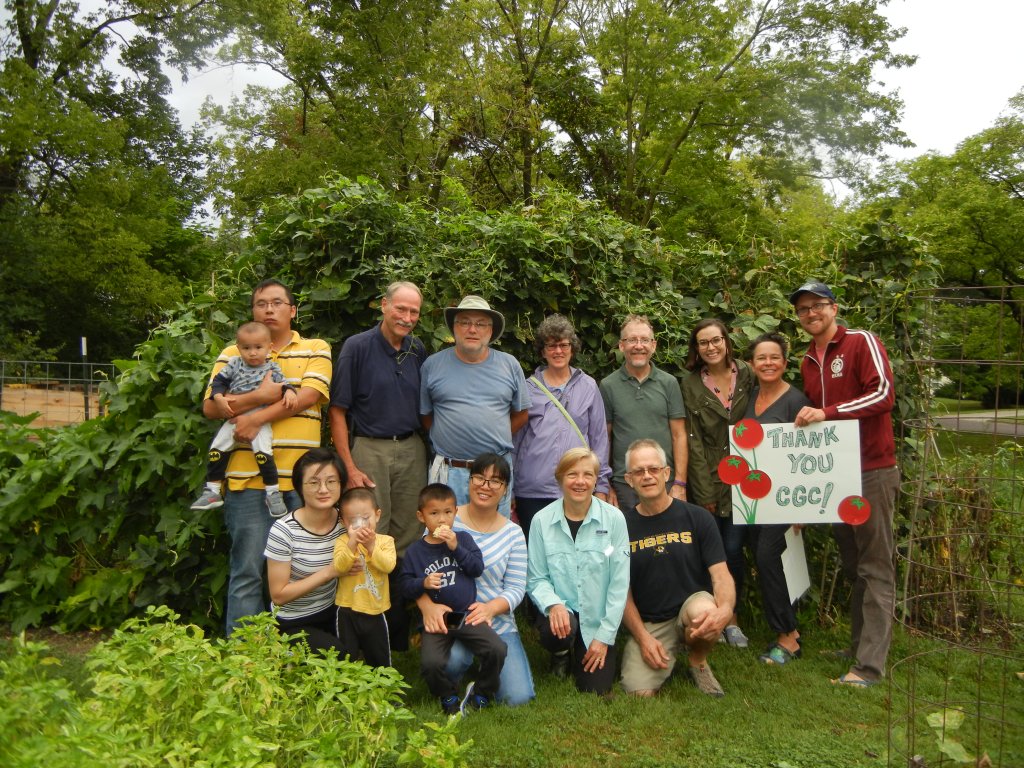
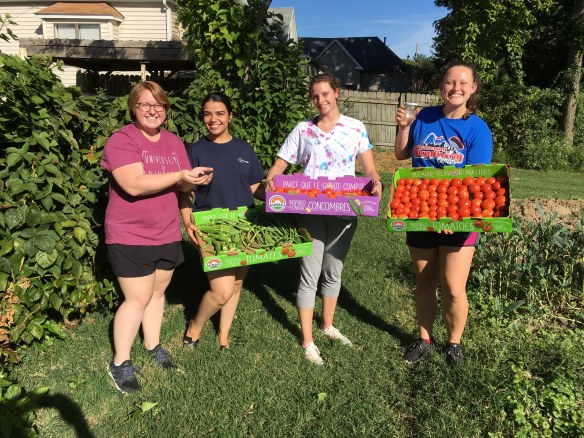
Ann St. gardeners — thank you for sharing the love!
P.S. If you missed the CoMoGives donation deadline of Dec. 31, you can still give to the CGC anytime of year online or with a check via the good old USPS.
The CGC has been helping gardens grow since 1983. Here’s a look back at some of the gardens we supported in 2019.
Ash Street Garden
Cambridge Place Garden
Friendship Garden Club
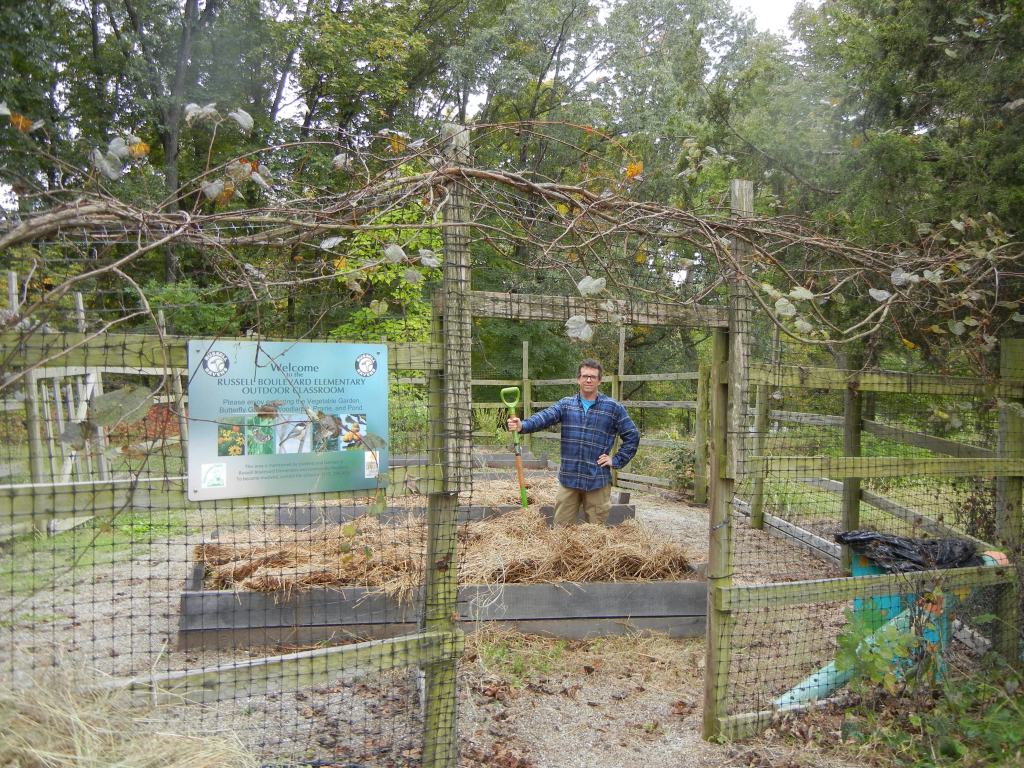
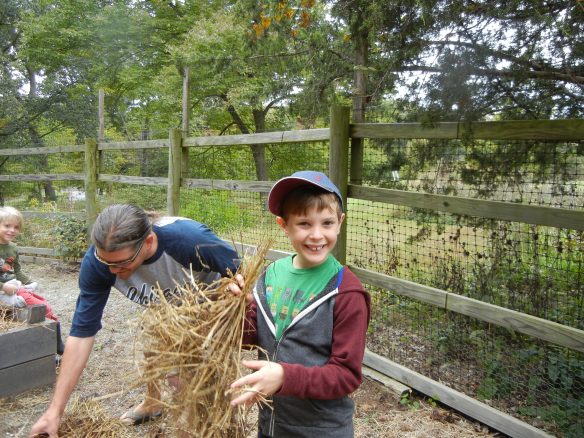
Russell Boulevard Outdoor Classroom
Ann Street Garden
Cougarden at Columbia College
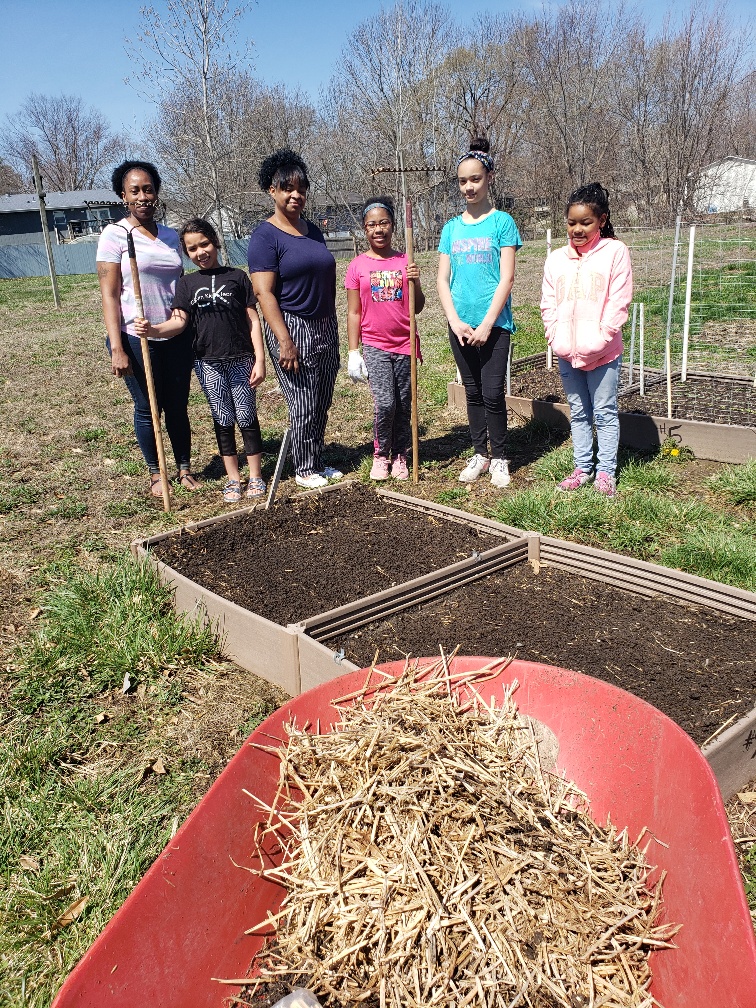
The support we receive from donors like you allows us to fund fences, tools, water, mulch, compost, plants, seeds and equipment at gardens like these. It only takes $10 to show your support for another great year of growing community through gardens.
One of the ways that the Community Garden Coalition gets funding for our efforts (besides your generous donations) is through a small grant from the City of Columbia. To receive this grant, we must apply every two years and go through the same rigorous process as agencies with paid employees. Part of the review process includes taking Health Department commissioners on a tour of one of our gardens. This year, Garden Leader Hari Poudel and other gardeners hosted this tour at the Ash Street Garden, and I went along.
That tour was a revelation for me! I wish that everyone could have been along to see how important this garden is to so many people. I always knew that we helped people grow tasty and healthful produce for themselves, family and friends, but I didn’t realize how many people originally from other countries used our gardens to grow their native produce and medicinal plants. According to Hari, there are thirty different families gardening at Ash Street, many of whom came from Nepal, Bangladesh, Taiwan, South Korea and China.
I recently asked Hari if he would mind answering the following questions so more folks could get a glimpse of the Ash Street gardening community.
Q: What inspired you to become the garden leader at Ash Street?
Hari: First, I am very glad to serve as a garden leader in the Ash St garden. The key motivational factor is my intention of serving local communities where I live. Second, when I am at the garden, I feel it is my second home. It is also a place to meet people from different backgrounds, experiences, and cultures. More importantly, a community garden can serve as a social network place which helps in enhancing social ties and building a greater feeling of community. Lastly, I am able to learn different vegetable farming practices from people from different countries. It’s a great learning opportunity.
Q: Please describe the gardeners at Ash St. and how you think the garden helps them and their families.
Hari: The garden has a broad impact at the community level. About 30 households, including 67 family members, are actively involved in Ash St garden. Gardeners have grown a wide variety of vegetables. More than 50% have been gardening for more than four years. We always have new applicants on our waiting list. The planting season starts right after our garden kick-off day in April and it will go until late October or early November. During my four year experience as a garden leader, I would say more than 90% of the gardeners depend on fresh vegetables for about 5-6 months on the garden. Thus, I would say that our garden has significantly contributed to help in providing fresh vegetables to our gardeners. I am also one of the beneficiaries.
Thanks to Hari and all the gardeners at Ash St., the Health Department commissioners were very pleased with their garden tour, and the City has once again awarded the CGC with a social services grant to continue our support for gardens like these.
This December, you can also show that you support community gardening by making a donation to the CGC through the CoMoGives local giving project. Your dollars go directly to pay for water, tools, mulch and more at gardens like Ash Street. Find our CoMoGives page here, and don’t forget to donate by December 31!
In 2019, the Community Garden Coalition was pleased to support over 1,000 gardeners through another season of growing food and cultivating community.Our member gardeners include people stretching their food budgets, students learning about growing plants for the first time, people growing produce to donate to others and gardeners keeping alive food traditions from distant cultures.
To help community gardens thrive in Columbia, our all-volunteer group offers seeds, plants, water, insurance, tools and supplies. We believe that small gardens can have large benefits. They provide healthy food, stronger communities, greener neighborhoods and a sense of pride and shared accomplishment.
For the third year in a row, we’re joining the CoMoGives local giving campaign. Our goal is to raise $5,000 during the month of December – and we need your help!
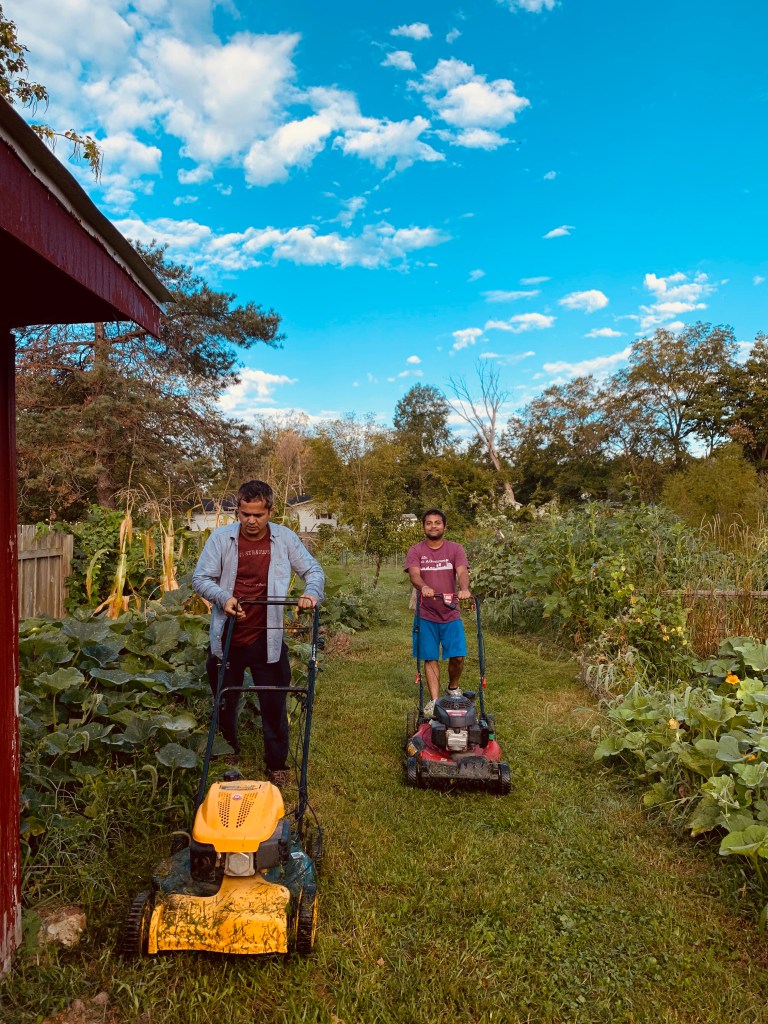
Even a small donation can go a long way in our budget! Your dollars stay local, and they’ll go directly back into supporting community gardens used by your neighbors and friends with hoses, wheelbarrows, lawnmowers, seeds, compost and more.
We would also like to spread our message further this year. Can you help us spread the word about community gardening and our mission, by sharing this message with someone else you know?
You and your friends can also stay in touch with CGC and check on our progress by following us on Facebook. Thank you for your support and consideration, and happy holiday season from your CGC Board of Directors!
Kathy Doisy, President Jenny McDonald, Vice President Bill McKelvey, Treasurer Lauren Godsy, Secretary Ann Marie Gortmaker Kristin Hatton Sarah Kendrick Zach Pietryla
Congratulations on another great season of gardening!
The Community Garden Coalition would like to thank all our hardworking garden leaders and volunteers and all our generous donors for their efforts. We are so appreciative of what you do and how you help your community!
We also depend on the support of many individual donors through the CoMoGives local giving campaign in December. Can you help us this year with a donation or by passing on our message to your friends and family?
You can donate to the CGC and many other great local organizations through CoMoGives starting Dec. 1.
With record cold temps and snow so far this November, most garden plots are finished producing for the season. Before you shift away from thinking about gardening for the winter, though, please do the following.
If you’re at a community or group garden, let your garden leader know whether you’re planning to return next year. This will help leaders know what plots will be available for newcomers next year.
Clean up your plot. If you need tips on how to put your garden to bed for the winter, consult your garden leader.
Consider making a year-end donation to the CGC to help with maintaining your community garden next year. We’re a very small, all-volunteer non-profit, and even modest contributions help us fund water, mulch, tools and more to support community gardening in Columbia. Donate here today, or wait for December when the CGC will be participating in the CoMo Gives local giving campaign.
Consider donating some of your time. Individual gardens need good leaders and team members and the board of the CGC could use new members, too. Contact your garden leader or our board members to get involved.
Wildlife experts from the U.S. Fish and Wildlife Service, MO Dept. of Conservation, University of Missouri, and the City of Columbia will talk about pollinator conservation challenges, habitat restoration, and policy that are occurring at all levels of government.
Come for the entire event or just for a little bit. All are welcome including children.
Have you ever noticed that as you grow older you start to like foods that you thought you didn’t like at all? I sure have! One vegetable that I really didn’t like in my youth has gradually become a favorite of mine. What vegetable is it? Sweet potato!
Sweet potatoes are related to the morning glory vine, and if you see some flowers on yours late in the season you will recognize the similarity. They are only distantly related to common potatoes and not at all related to true “yams.” They are believed to have originated in central or southern America and Columbus appears to have been the first to bring them to Europe (Wikipedia). By the time European colonists came to what is now the U.S., sweet potatoes were already a part of their gardening plans.
The reason I started growing them was curiousity. I had a little extra garden space, and my neighbor had some extra “slips.” Sweet potato slips are the rooted shoots from the tubers that are used to start a new crop. The CGC offers slips to gardeners during the warm season plant distribution each spring. I did some quick reading on how to plant them and stuck them in. A nice mounded trough full of sandy compost is ideal. No need for any chemicals in Mid-Missouri, plus they like hot, dry weather! By late summer, the vines had attempted to cover everything in and around the garden, including my husband’s truck! But any hassle they caused they made up for at harvest. From year to year my production has varied, but I have harvested as much as 160 pounds of tubers from four slips! Imagine getting that kind of production when there’s no grocery store to tide you through the winter. No wonder this crop has spread all over the world!
Author with her personal record 12 pound sweet potato.
There is a trick to storing all that bounty. Sweet potatoes must be “cured” before storing. Curing not only improves storage (I still have one ready to eat from 2018), but also makes them sweeter and higher in nutrients. If you doubt this, try eating one straight out of the garden, make a mental note of how sweet it is, and then compare that to a cured potato one month later. In commercial production, tubers are stored in large buildings at 85-90 degrees (F) and about 90% humidity for anywhere from 5 days to 2 weeks. Unfortunately, that’s not so easy to replicate around here in the fall.
Here’s what I do. For one thing, NEVER let frost touch your vines. Sweet potatoes are a tropical plant, and frost encourages them to quickly rot. Starting in late September, I keep a close eye on the weather forecast. What I’m watching for is a late hot spell. A day or two before it hits, we cut off all the vines (the leaves can be eaten). Then when it’s at least 80 degrees, we dig them up and let them sit all day in the shade of other garden plants. Next we gently knock off the dirt (do not wash them), and either place them in a shaded hot place outside or, if necessary, move them into the hottest room of our house, making sure they are shaded. I doubt I have ever met the humidity requirements, but like I said I still have an 11-month old sweet potato to eat, so I must be doing something right. When I feel like they’ve cured long enough, I move them down into the basement. Cured tubers keep best at about 60 degrees in the dark.
So, what’s the best way to eat a sweet potato? For me, baked and then mashed with butter, brown sugar and fresh grated ginger — I actually converted a previous sweet potato hater with that fresh ginger addition. They are also good diced and roasted with a little olive oil and salt, or made into sweet potato fries. My neighbor who started me down this road makes them into black bean and diced sweet potato quesadillas for the kids at her daycare. Apparently they love them! And since sweet potatoes are chock full of beta carotene and vitamin A, nutrients that are lacking in many American’s diets, why not give them a try?
For additional information on growing sweet potatoes here are some handy links: